


Teaching UFC trainer Filip Lukes some of the best mace techniques, especially for martial artists. Everyone who tries the mace is always humbled by it!
During our latest training session with Filip Lukes, strength and conditioning coach behind former UFC Champion Jiri Prochazka, we spent time going deeper into mace training and the qualities it develops.
Filip is extremely strong by conventional standards. He can handle serious weights and has spent years preparing athletes at the highest level of combat sports.
Yet the mace still humbled him — just like it did us back in the day.
This happens almost every time you put the mace into the hands of someone who has never trained with it properly.
From the outside, the exercises don't necessarily look that difficult. The mace is moving, the movements appear smooth and the weights themselves aren't enormous.
Then you actually try it.
Suddenly your hands are struggling to hold onto the handle. Your wrists and forearms are working far harder than expected, while your triceps, shoulders, chest, back and core are all being taxed at the same time.
During the session, Filip described his wrists and forearms becoming completely exhausted from movements that looked relatively simple.
The mace places most of its weight far away from your hands. Because of this long lever, even a relatively light mace can create a surprising amount of force that your hands and forearms continuously have to control.
This is also why there is little reason to chase heavy weights in the beginning. A lighter mace or a sledgehammer used properly can already humble almost anybody...
Why The Mace is Misunderstood & Why It's More Effective Than People Think
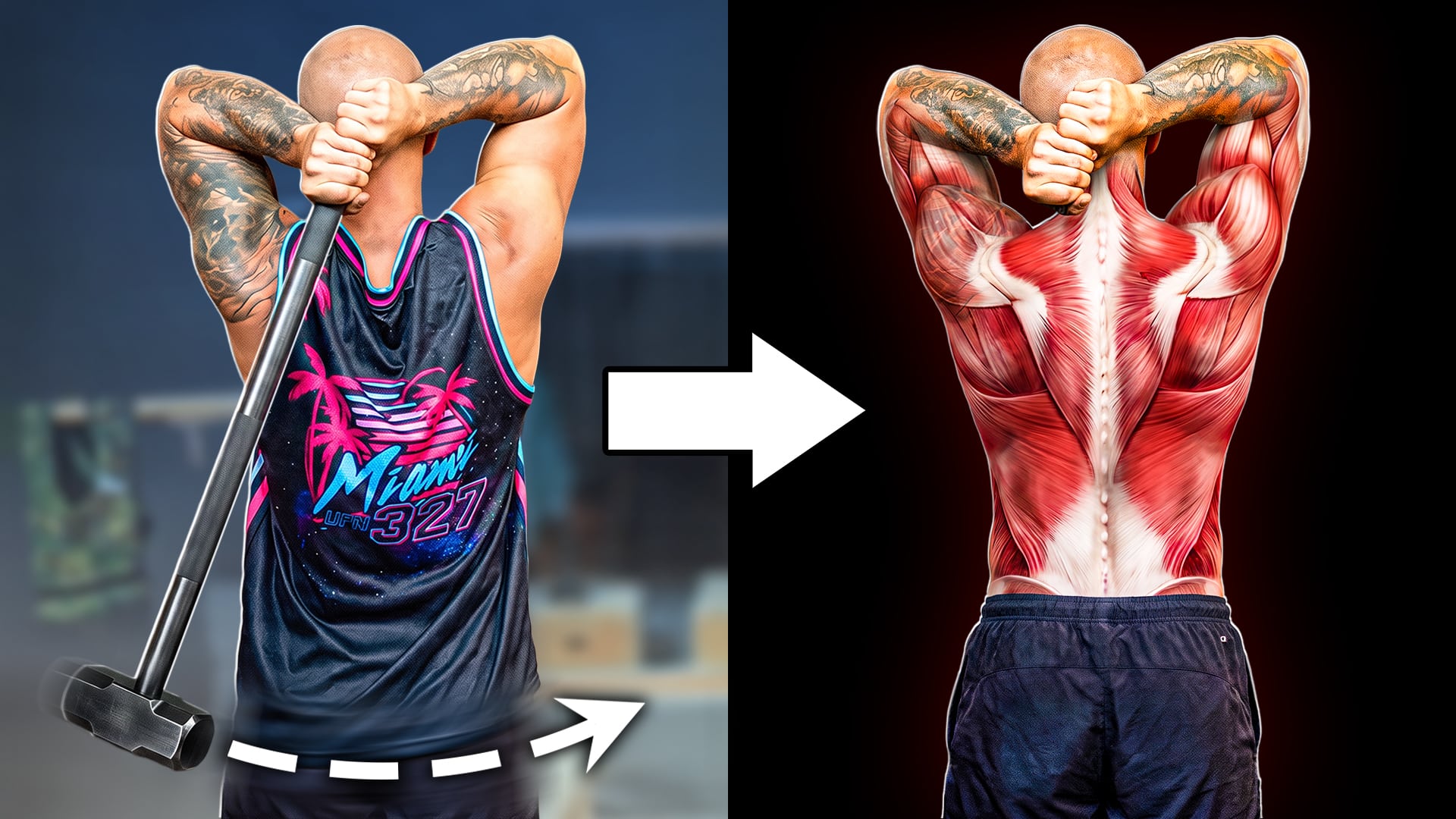
One of the biggest misunderstandings about mace training comes from the fact that you are swinging the weight.
People see momentum and assume there cannot be much muscular tension.
If the mace is swinging around the body, surely momentum is doing most of the work?
In reality, the opposite can happen.
You have to create the momentum, hold onto the mace while that momentum pulls the weight away from you, and then control, redirect and decelerate that force.
In reality, momentum doesn't remove the tension. It increases the forces you have to control!
This is especially noticeable because of the mace's long lever. As the weighted end accelerates, the demands on your grip, wrists and forearms become much greater than you would expect from the weight alone.
This was something we discussed directly during the session. People assume there isn't much strength involved because the mace is moving, yet once performed correctly the exercises become extremely demanding.
The rest of the body has to work as well: Your hands grip, your forearms stabilize, your arms guide the mace, your scapula stay stabilized and your core controls the torso.
Once rotation and the hips become involved, the exercise becomes a true full-body movement.
You are producing force, absorbing force and controlling force at the same time. And this is what creates a strong stimulus for the body to grow.
Athletes & Fighters Need to Start Using This Tool
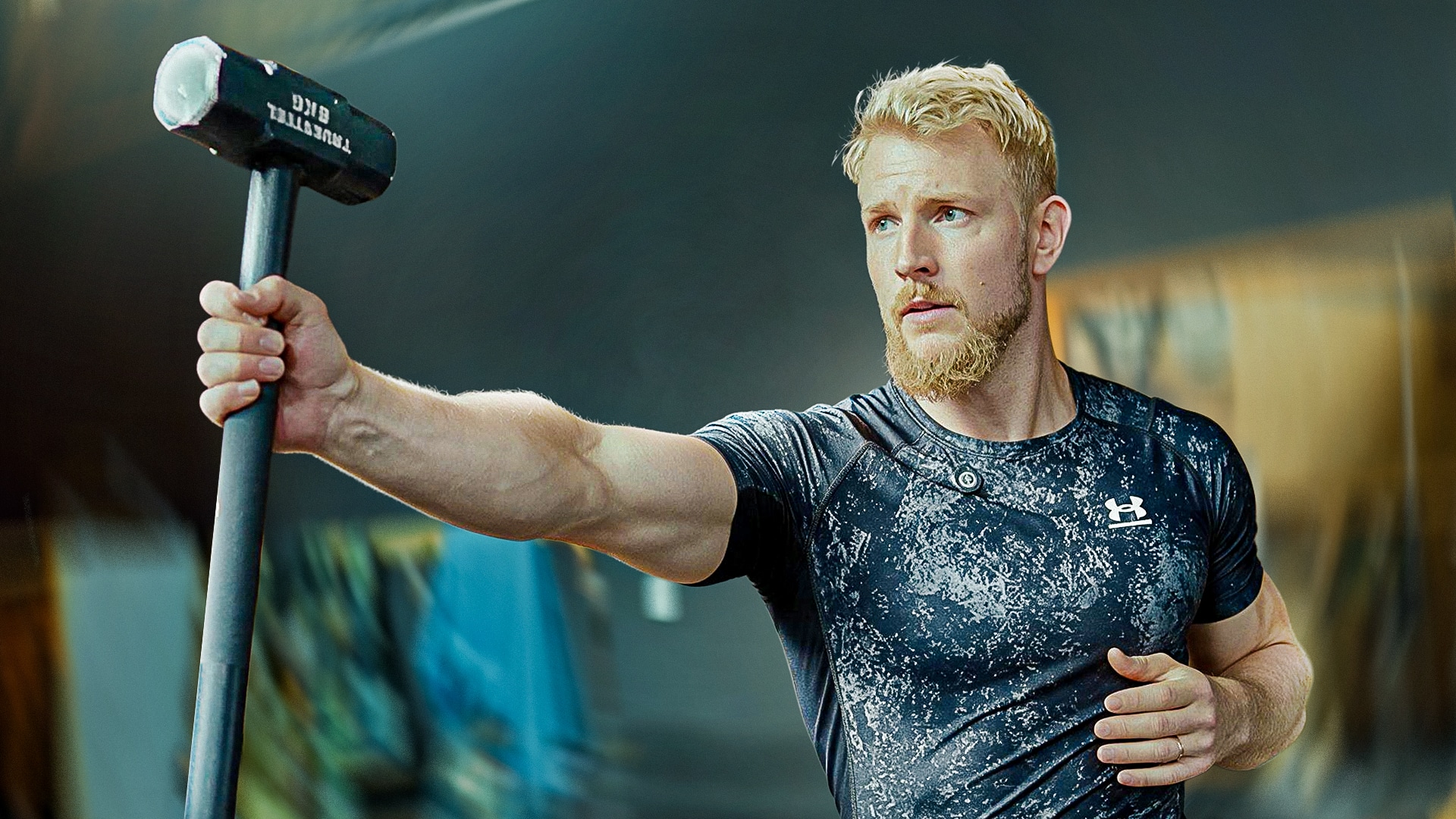
This is where mace training becomes especially valuable for athletes and fighters.
Most sports don't happen in perfectly straight lines and linear outputs.
You rotate, twist, accelerate, decelerate and transfer force through the entire body.
Combat sports are an obvious example.
Punching & kicking requires rotation through the hips and torso. Wrestling and throwing involve controlling force through constantly changing angles.
Mace training naturally develops many of these qualities. Also any sport that involves holding onto a stick or club will also benefit massively from this type of training.
During our training, we worked with rotational swings, diagonal patterns and hammering movements where the hips generate momentum while the torso and upper body control the mace.
Many of these techniques we have developed by ourselves and added to Iron King Method.
As Eero explained during the session: “You go with the weight, not against it.”
Athletic movement isn't about becoming maximally stiff and forcing something through a fixed path.
Often you need to create momentum, relax at the right moment and then regain tension when the movement demands it.
The mace teaches this naturally.
It also teaches deceleration. You accelerate the weighted end, allow it to travel and then your body has to control and redirect that momentum.
This combination of acceleration, deceleration, rotation and full-body integration is one of the main reasons mace training can be so useful for athletes and martial artists.
It also strengthens areas that are commonly neglected or poorly trained: the hands, wrists and forearms.
Eero has been teaching mace and club training for many years, and these tools remain some of the best methods for developing strength through unusual angles and movement patterns.
They aren't designed to replace conventional strength training – they add another dimension to your training.
And if you're already strong, don't assume the mace will be easy because your physique may have weak links you are not aware of or you haven't touch for years.
Once that weighted end starts moving and pulling against you, you may quickly discover forms of strength you have never trained before.
You can learn our strength training emphasized way of Mace Training inside IronKingMethod.com
Most methods of mace training rely a lot on skill and just swinging the mace for the fun of it or the sport of it. We have fun as well, but we have developed an entire strength training methodology around the mace and the clubs as well.
Stay strong.
