


What if one of Karate’s most important forms has lost something essential along the way? Discover the ancient Chinese roots of Sanchin and the forgotten principles behind its breathing and power.
Karate is one of the most effective and widely practiced martial arts in the world. However, what many people don't know is that its origins are deeply connected to Southern Chinese Kung Fu.
In fact, some of the most fundamental techniques and forms in Karate come directly from the traditional martial arts of China's Fujian Province.
One of the most important examples is Sanchin which is a foundational kata form practiced in Okinawan Goju-ryu and many other traditional Karate styles.
In Five Ancestors Fist, this form is known as Sanzhan, meaning "Three Battles", yet nowadays they have become so different that you cannot call them the same form anymore.
Although Sanzhan is the original form of Sanchin, there are significant differences in how they are practiced today, particularly when it comes to breathing, tension, and the balance between hard and soft.
The Chinese Origins of Karate
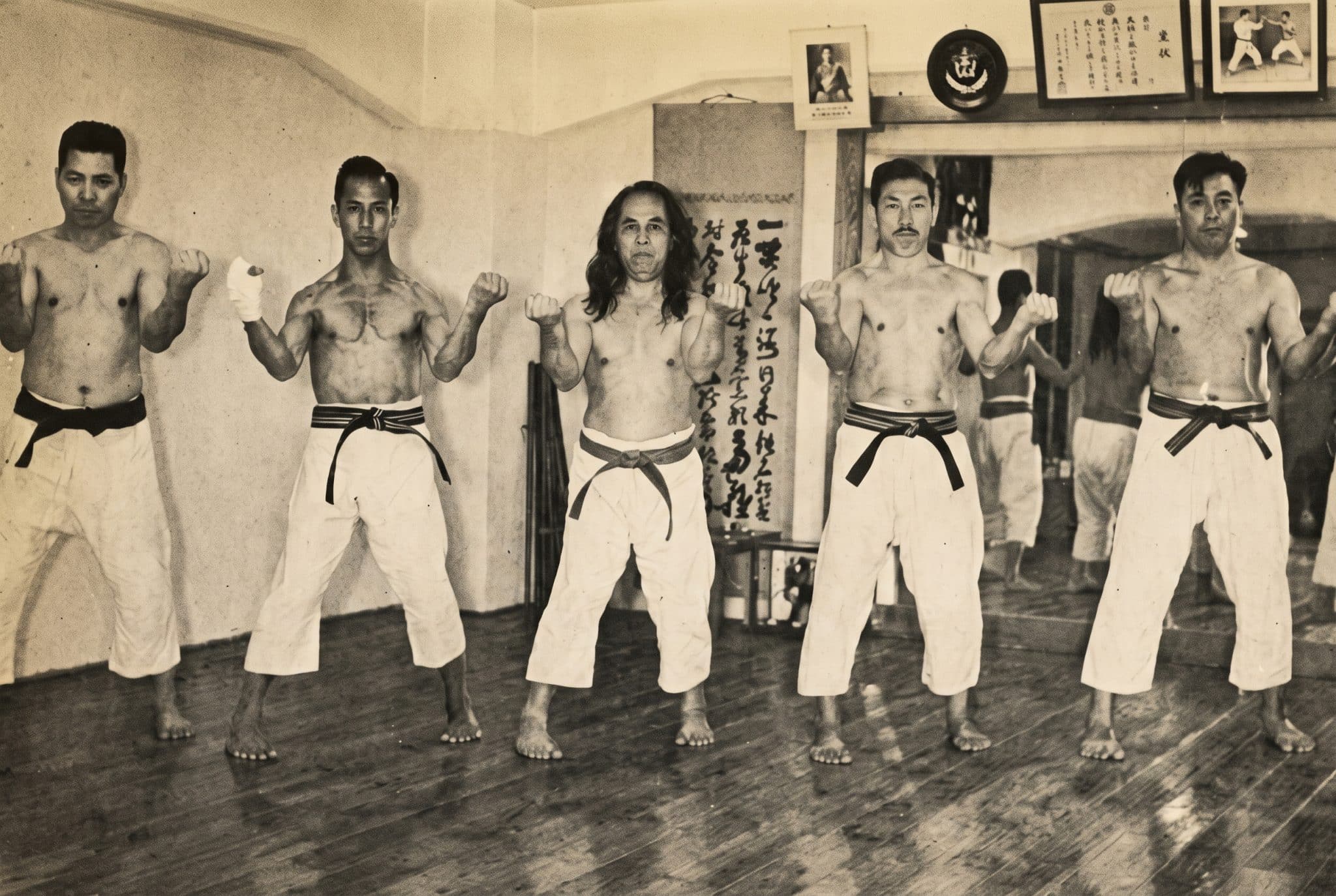
Did you know that Karate was originally called "Tode" 唐手 in Okinawa, meaning "Chinese Hand"?
The name reflected the strong influence of Chinese martial arts on Okinawan Karate traditions.
For generations, Okinawan masters traveled to China, especially Fujian Province to learn directly from local Kung Fu masters.
One of the most influential figures was Kanryo Higaonna, the grandmaster of the Naha-te lineage, who reportedly spent more than 13 years training in China.
His famous disciple, Chojun Miyagi, who later founded Goju-ryu Karate, also traveled to Fujian to study Chinese martial arts. So the lineage is clear - Chinese styles are in fact the originator.
It wasn't until the early 20th century that the meaning of Karate began to change.
By the late 1930s, the original characters associated with "Chinese Hand" had been replaced with characters meaning "Empty Hand." also known as "Karate" today. This reflected an effort to give Karate a more distinct Japanese identity.
Nevertheless, the Chinese foundations remained.
Among the Southern Chinese styles that influenced Karate the most were White Crane, Luohan Quan (Monk Fist), and Wuzu Quan (Five Ancestors Fist).
These traditions share many principles and techniques with traditional Okinawan Karate, including one of its most important forms: Sanchin.
Sanzhan: The Mother Form of Southern Shaolin Kung Fu

Sanzhan, or the Three Battles form, is considered one of the most important foundational forms in Southern Shaolin Kung Fu.
It is especially prominent in Wuzu Quan (Five Ancestors Fist) which is a traditional Chinese martial art that combines principles from five different fighting systems:
Sanzhan is often described as the mother fist because it contains many of the fundamental principles upon which the entire martial system is built and it also builds the frame & structure for fighting.
Through Sanzhan, practitioners learn how to develop a strong structure, coordinate breathing with movement, generate power, and combine muscular tension with relaxation.
In Southern Chinese martial arts, there is a traditional saying:
"Kung Fu Hao, Sanzhan Zao." (功夫好,三戰找)
In other words, if you want "to develop good Kung Fu, you must study Sanzhan first".
There is also another famous saying by the old masters:
"Start with Sanzhan, practice it until death."
This illustrates just how important the form is considered.
Sanzhan is not merely something beginners practice before moving on to advanced techniques. It is a lifelong training method that continues to reveal deeper principles as the practitioner develops.
Grandmaster Jiang Yu Shan mentioned that many Southern masters learn dozens of forms throughout their lives, only to return almost exclusively to Sanzhan in their later years.
How Sanzhan Became Sanchin in Karate
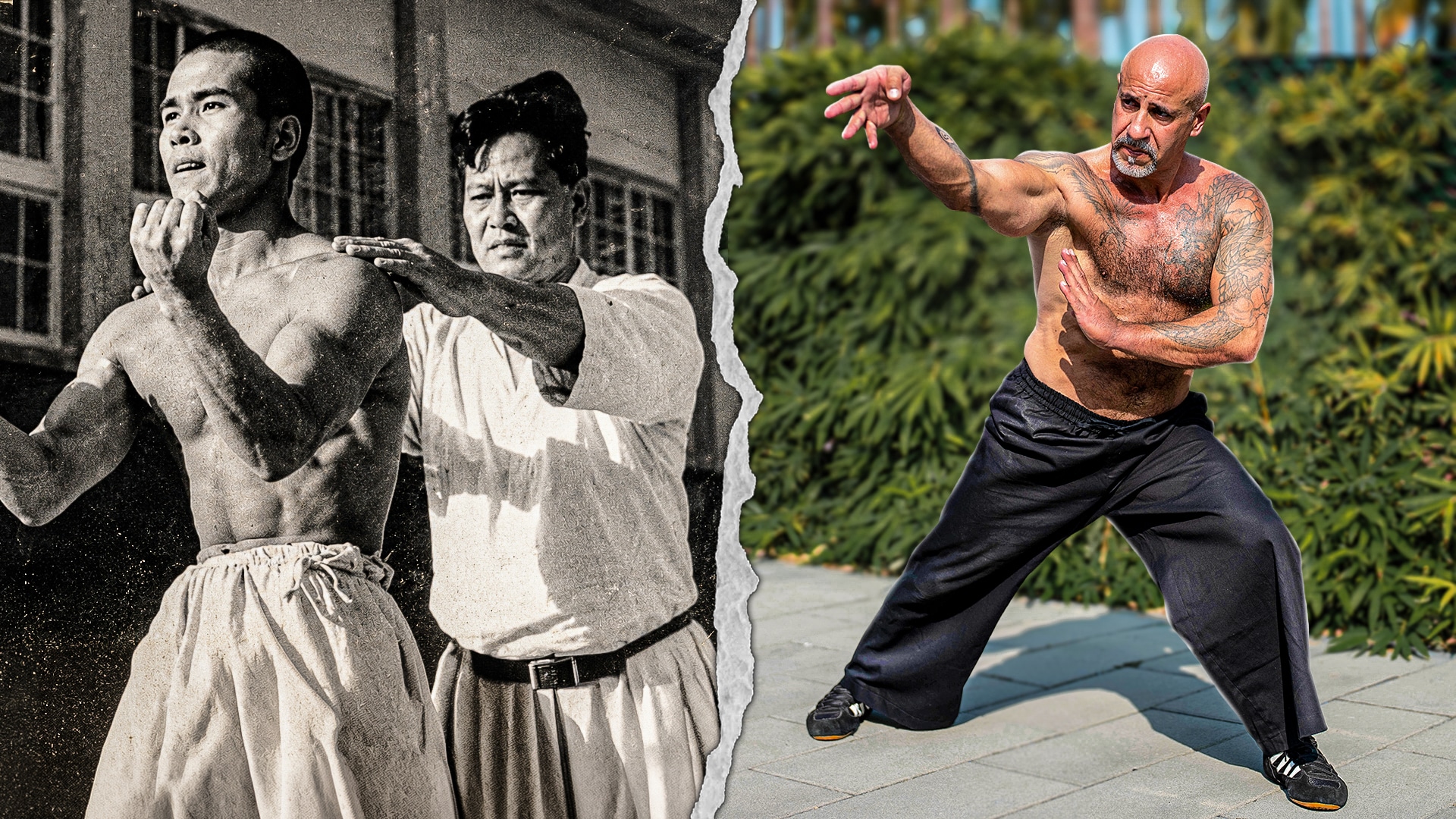
When Chinese martial arts were introduced to Okinawa, Sanzhan eventually developed into the form known as "Sanchin".
The importance of Sanchin was particularly evident in the teaching methods attributed to Kanryo Higaonna.
According to traditional accounts, his beginning students were required to practice Sanchin exclusively for three to four years before learning other forms.
Chojun Miyagi also emphasized its importance with the quote:
"Karate begins with Sanchin and ends with Sanchin."
This is remarkably similar to the traditional Chinese teachings surrounding Sanzhan.
Both systems recognize that the foundation of martial ability is not simply learning more techniques, but developing the body and understanding the principles behind those techniques.
However, as Karate evolved independently over the generations, certain aspects of Sanchin changed... and things didn't change for the better.
The most noticeable difference can be found in its breathing methods.
The Difference in Breathing & The Balance of Hard and Soft
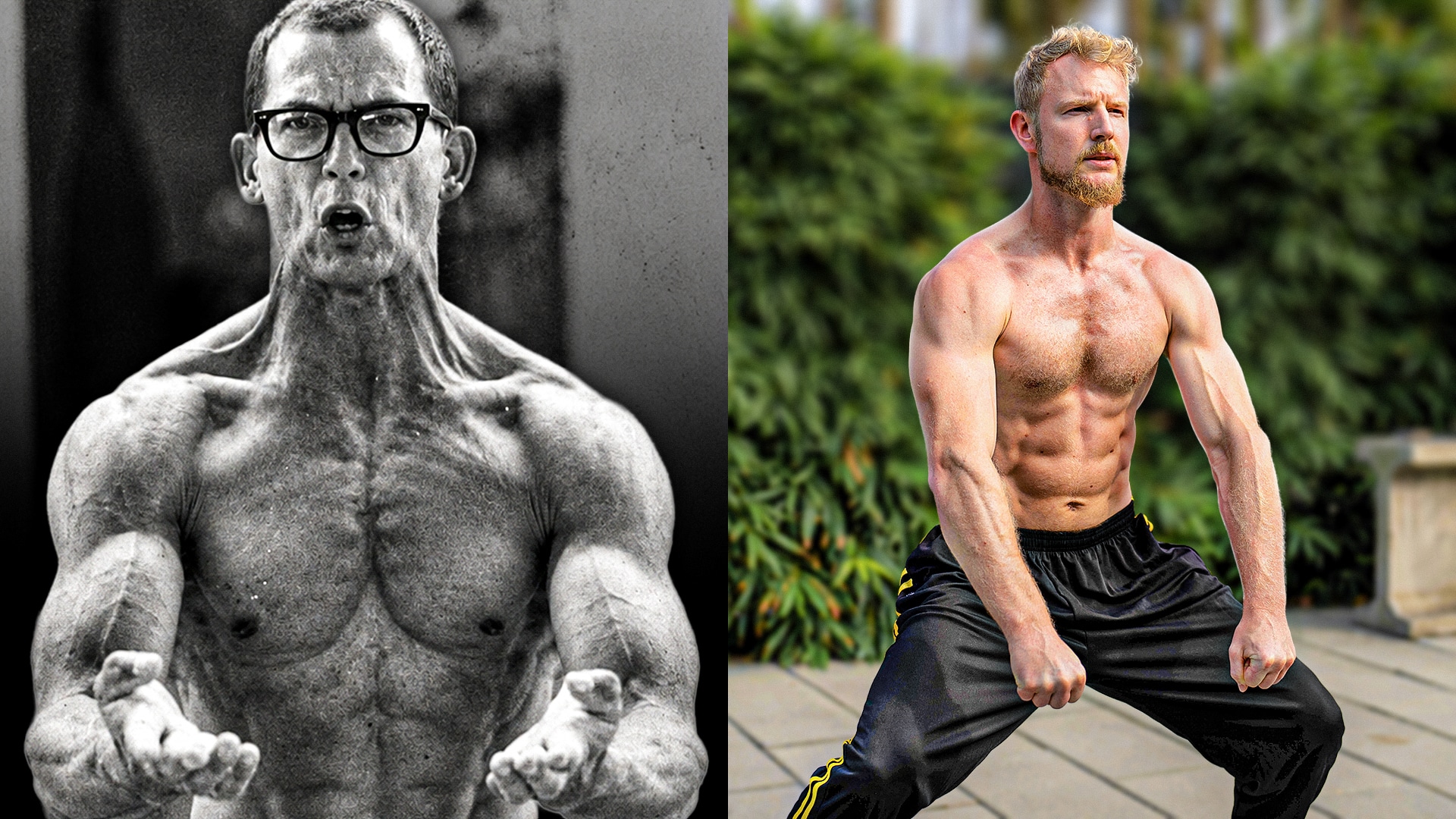
One of the most distinctive features of modern Karate's (Goju-ryu style) Sanchin is its powerful and audible breathing, often referred to as Ibuki.
In many schools, practitioners perform the form with intense muscular contraction and forceful breathing that produces a pronounced sound from the throat.
However, the traditional Sanzhan breathing practiced in Five Ancestors Fist can be noticeably different. The Taiwan's Five Ancestors Fist especially has a very well-preserved form of Sanzhan.
In the Taiwanese tradition demonstrated by Grandmaster Jiang Yu Shan, the breathing method is known as the Lion's Roar.
The practitioner inhales through the nose and exhales through an open mouth, generating the breath from deep within the body while avoiding unnecessary tension in the throat.
You see, excessive emphasis on forceful throat breathing is a common mistake. The objective is to coordinate the breath with the body's movements rather than forcing air through a constricted throat.
This raises an interesting question: Why do some Karate practitioners use such a different breathing method if Sanchin originally came from Sanzhan?
One possibility is that certain principles were changed or misunderstood as the teachings passed from one generation to another.
However, there is another explanation.
According to oral transmission, Chojun Miyagi encountered a breathing method in Fuzhou that resembled the sound of a roaring snake. Eero later discovered that certain White Crane lineages still preserve breathing methods that bear a very close resemblance to the Ibuki breathing.
Therefore, Miyagi may have adapted a particular Chinese White Crane breathing method rather than inventing something entirely new.
Beyond breathing, another important difference concerns the balance between hardness and softness.
Interestingly, Goju-ryu literally means "Hard-Soft School." Yet most interpretations of Sanchin emphasize muscular tension and hardness at the expense of relaxation.
In traditional Southern Chinese Kung Fu, these two qualities are inseparable.
The practitioner must learn to develop a powerful and stable structure without becoming unnecessarily rigid. The ability to relax is just as important as the ability to contract the muscles and generate explosive force.
Chinese Sanzhan teaches you to compress your body into a dense cannonball of muscle while also learning to float like a feather and shoot power like an arrow.
This balance is also relevant to health.
Actual Karate practitioners have raised concerns about excessive tension and forceful breathing in Sanchin. Many believe that straining against a closed throat can cause substantial increases in blood pressure and cause a myriad of health issues.
Ultimately, the purpose of Chinese Sanzhan is not simply to make the body harder, but to master the relationship between tension, relaxation, breathing, and power. A lot of this is missing in the Japanese Sanchin.
And understanding this balance may be one of the most valuable lessons that the original Chinese traditions can offer modern Karate practitioners.
Why Sanzhan Is a Lifelong Practice & The Foundation
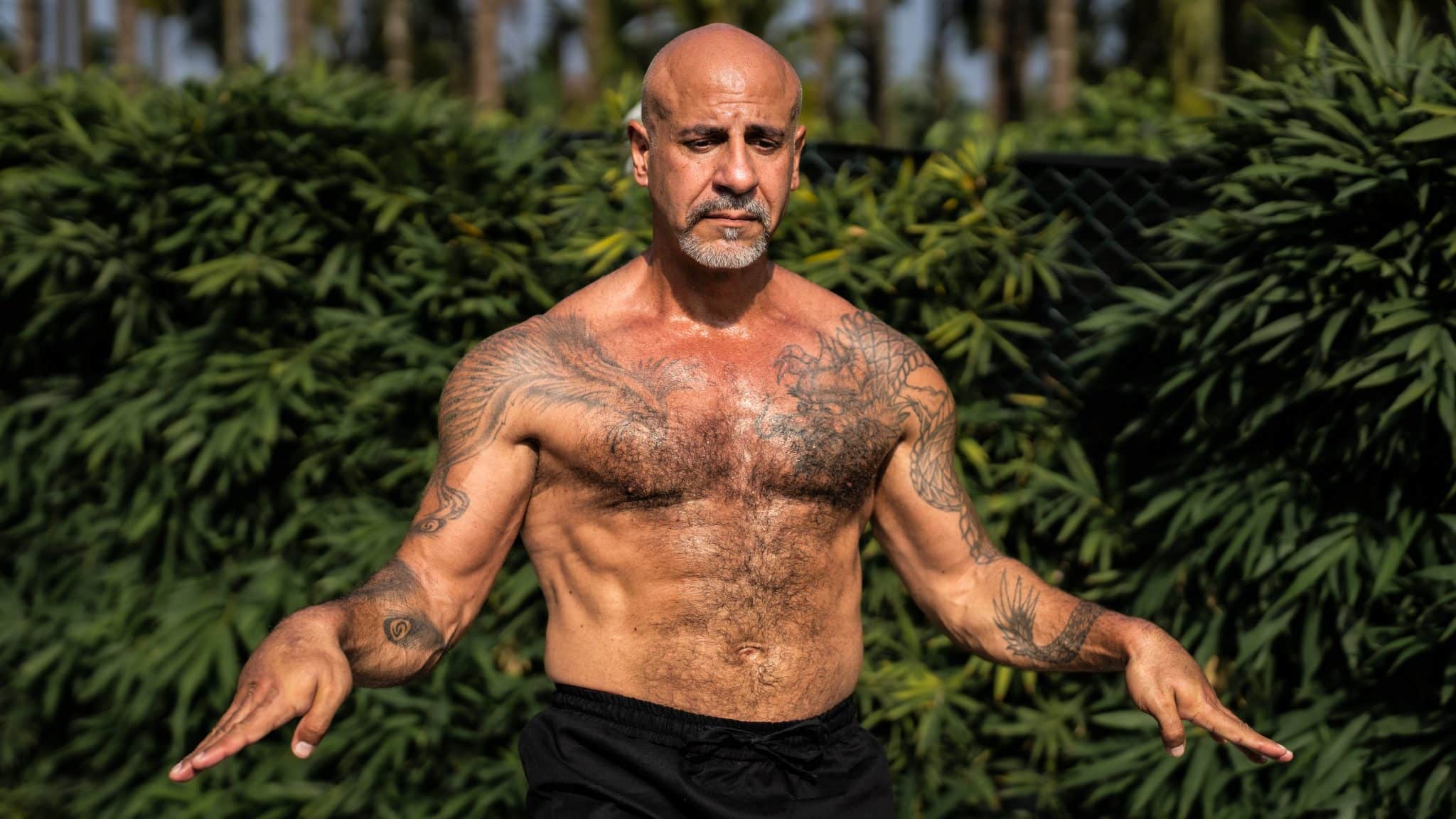
The true value of Sanzhan is to build the fundamental qualities that make martial techniques effective and make you effective as a martial artist in general.
Strong frame, coordinated strikes, controlled breathing, the correct use of tension and relaxation, and the ability to generate power through the entire body are essential attributes we all need to have.
These qualities cannot be developed without high level knowledge. Moreover, they require consistent practice and refinement.
This is also why traditional masters place such great importance on learning directly from a proper lineage. Knowing the external movements of a form does not necessarily mean understanding its deeper principles which is most often than not the case.
The grandmaster Jiang Yu Shan teaches something special. Why it matters even more is that Sanzhan is such an important historical link between Southern Chinese Kung Fu and Okinawan Karate.
Although different lineages have developed their own interpretations, studying the Chinese Sanzhan reveals the original principles behind Sanchin which were never supposed to be lost.
The quality of Sanzhan and these deeper principles is precisely why some masters begin their training with Sanzhan and continue practicing it for the rest of their lives.
You can discover a very well preserved and a rare form of Sanzhan inside the grandmaster's Five Ancestors Fist at WarriorNeigong.com
Stay strong.
